Spot the Difference Dinosaur Worksheet for Focused, Fun Learning
Some kids can spot a cookie missing from the plate in two seconds flat, but ask them to notice small changes in a picture and suddenly it is serious business. That is where a spot the difference dinosaur worksheet comes in. It turns careful looking into a game, and somehow dinosaurs make everything more exciting.
At first glance, the two pictures look exactly the same. Same smiling T Rex, same spiky stegosaurus, same little volcano puffing in the background. But look closer. A tail might be shorter. A spot might be missing. A leaf could be in the wrong place. That moment when a child gasps and says, “I found one,” is half the fun.
What Is a Spot the Difference Worksheet
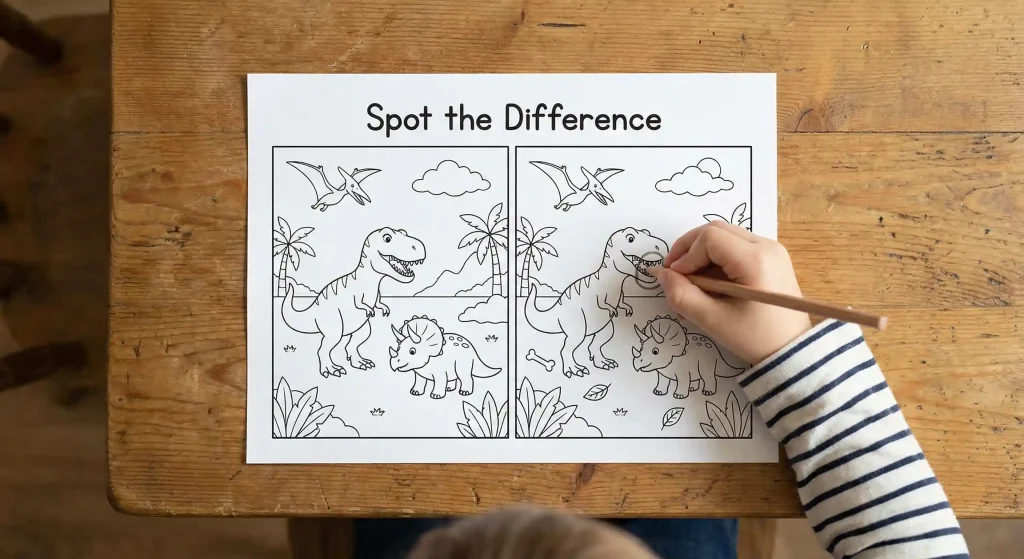
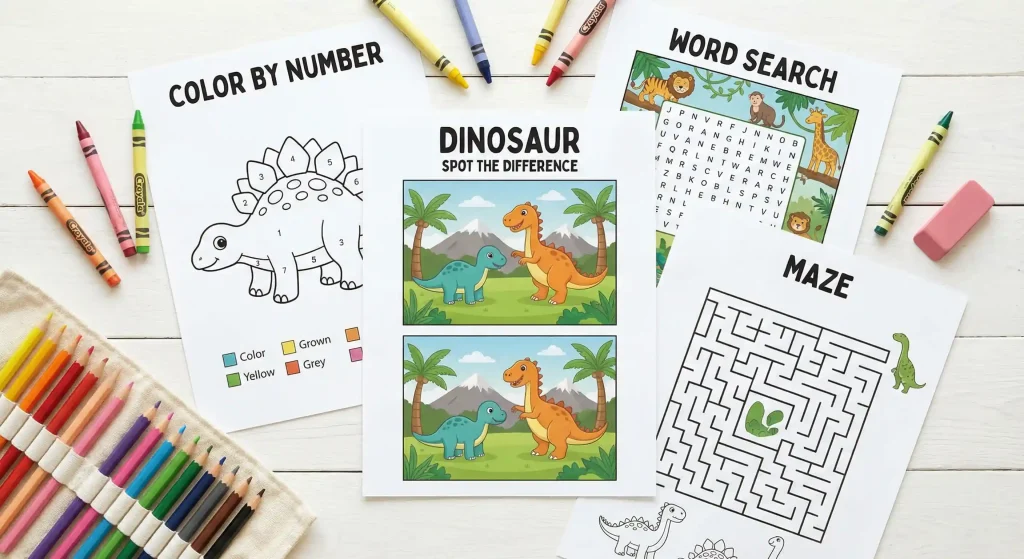
A spot the difference worksheet shows two nearly identical pictures side by side. The challenge is to find all the small changes between them. With a dinosaur theme, the pictures usually include friendly cartoon dinosaurs, simple backgrounds, and clear shapes that are easy for kids to recognize.
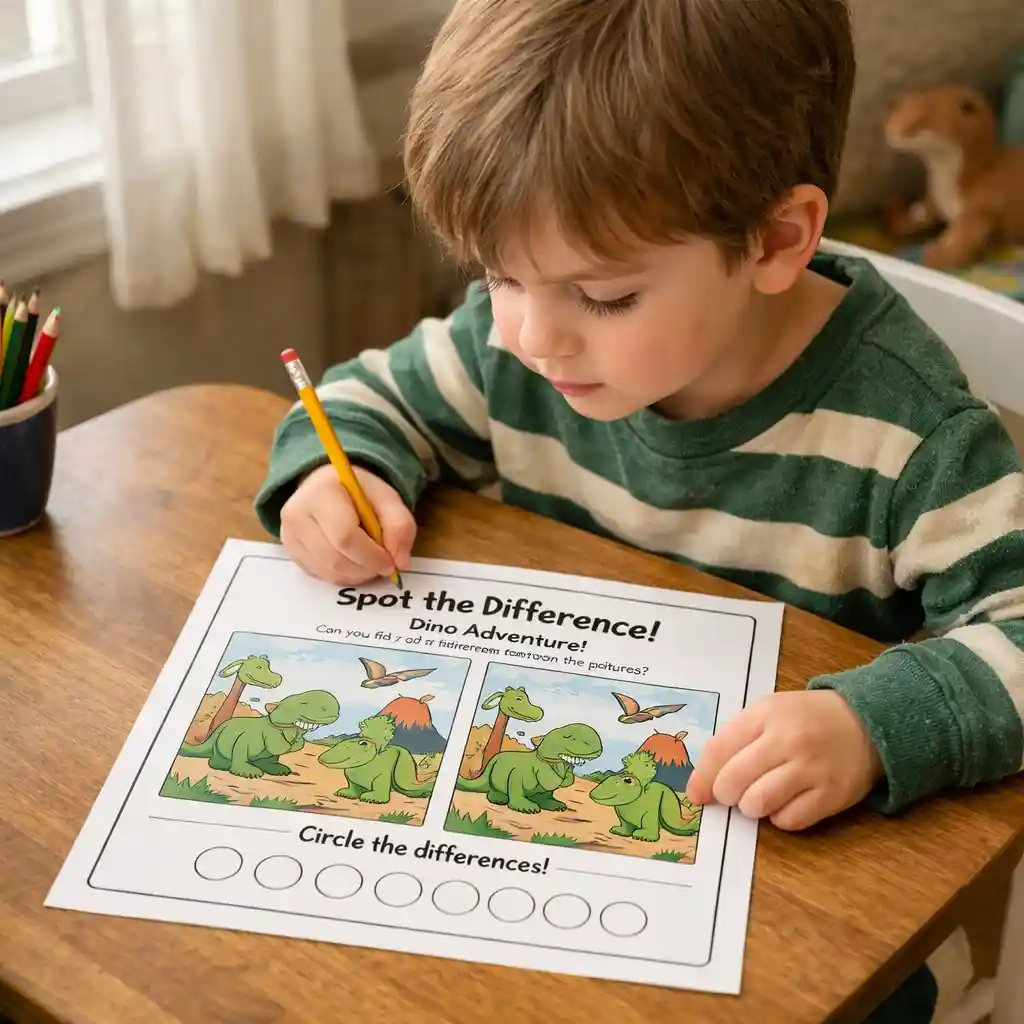
Children look carefully, compare both images, and mark the differences they find. It feels like a puzzle, but it is really a quiet workout for the brain.
This kind of activity works well for a wide age range. Younger kids may find just a few differences, while older children stay focused until they have spotted every single one.
Why Dinosaur Themes Work So Well
Dinosaurs have a way of grabbing attention right away. Even kids who usually drift away from paper activities tend to lean in when they see a T Rex or triceratops on the page.
The theme gives the worksheet a playful feel. Instead of thinking they are doing a task, children feel like they are exploring a prehistoric scene. That small shift in mindset can make a big difference in how long they stay engaged.
Plus, dinosaurs come with lots of fun details. Spikes, horns, long necks, tiny arms. All of those features create perfect opportunities for small visual changes that kids can search for.
Skills Kids Build While Playing
Spot the difference games look simple, but they support several important skills at the same time.
Visual discrimination improves as children learn to notice small differences between similar pictures. This skill later helps with reading, writing, and math, even if that feels far away right now.
Focus and attention get stronger too. Kids have to slow down and really look, scanning each part of the picture instead of rushing through. That patience carries over into other learning activities.
Problem solving is part of the process as well. Children develop strategies without even being told. Some check one section at a time. Others compare the two pictures back and forth. They are figuring out what works best for them.
Fine motor skills join in when kids circle or mark the differences they find. Those small hand movements help build control and coordination.
Making It More Fun at Home or in Class
You can keep the activity simple by just handing over the worksheet and a pencil. That is often enough. Still, a little storytelling can make it even more engaging.
Maybe the dinosaurs moved things around while no one was looking. Maybe a baby dinosaur changed a few details in the picture. Kids love small bits of imagination layered onto the task.
You can also turn it into a gentle challenge. Ask how many differences they think there are before they start. Or see if they can find them all without any hints. Just keep it light. The goal is focused fun, not pressure.
In classrooms, spot the difference worksheets work well as quiet center activities or early finisher tasks. At home, they are perfect for calm moments, travel, or winding down after a busy day.
A Simple Activity That Keeps Kids Looking
A spot the difference dinosaur worksheet may not look like much at first. Just two pictures and a pencil. But once a child starts searching for changes, they are hooked.
They look closer. They think harder. They feel proud each time they spot something new. And all the while, they are building observation skills that will help them far beyond this one page.
Sometimes the best learning moments happen when kids are simply staring at two dinosaurs and saying, “Wait… that one is different.” Explore more fun activties, crafts and coloring pages on our website.