Dinosaur Size Comparison Printable Poster
Kids love scale. Not in the tidy, ruler and math way. In the jaw dropping, eyes wide open way. How big was that dinosaur compared to me? Could it look through the window? Would its tail reach the door? A size comparison poster answers those questions in a way that sticks. It turns vague facts into something kids can feel in their bones. Even adults pause for a second when they see a towering sauropod next to a tiny human outline and think, wow, that’s a lot of dinosaur.
A printable poster keeps it simple. You can tape it to a bedroom wall, pin it in a classroom corner, or roll it out on the floor during a rainy afternoon. It becomes part decoration, part quiet invitation to wonder.
What a dinosaur size comparison poster actually teaches
At first glance, it feels like just a big picture with dinosaurs lined up. But there’s more going on than that. Kids start to notice differences. Some dinosaurs are tall but slender. Others are low to the ground and built like tanks. They begin to grasp that dinosaurs weren’t one single kind of creature. They were a whole crowd of shapes and sizes, each one doing life its own way.
This kind of visual learning lands gently. No pressure to memorize names. No tiny print to decode. Just noticing. Pointing. Asking questions that come out half formed and curious.
Building early comparison skills
When kids look at a size comparison poster, they’re practicing a basic skill that sneaks into a lot of learning later on. Bigger. Smaller. Taller. Shorter. Longer tail. Shorter neck. It’s math, in a way, but it doesn’t feel like math. It feels like play. The best kind of learning tends to show up like that.
Helping facts feel real
You can tell a child that some dinosaurs were as tall as a house. That sounds big, sure. But seeing a dinosaur tower over a small human silhouette changes something. The fact stops floating in the air and settles into a picture they can hold onto. It becomes real enough to talk about at dinner. Or to bring up out of nowhere a week later when you’re tying shoes. To keep that kind of hands-on learning going, you can explore a screen-free dinosaur fun pack for kids filled with simple and engaging activities.
How parents use a size comparison poster at home
You don’t need a lesson plan. Honestly, the poster does most of the work for you. Hang it at eye level for your child if you can. Kids notice things when they feel like the image belongs to them, not just to the grown ups.
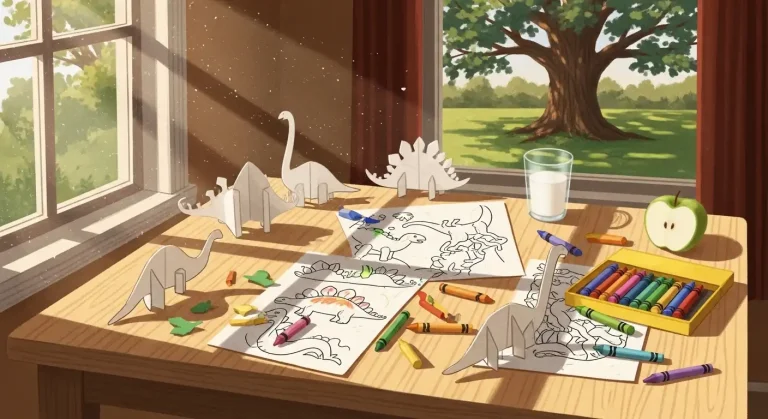
Some families turn it into a casual talking point. While brushing teeth, someone might point at the tallest dinosaur and say, that one looks like it could reach the ceiling. Other families use it as a quiet activity. A child sits on the floor with crayons and traces the outlines. No big goal. Just being with the picture.
If you’ve got more than one kid, the poster can spark gentle debates. Which dinosaur would win a race? Which one looks the friendliest? Those conversations wander, and that’s fine. Wandering is part of how kids think things through.
Where a printable poster fits in learning spaces
In a classroom or homeschool corner, a dinosaur size comparison poster becomes a soft anchor. It doesn’t shout for attention. It waits. Kids glance at it during transitions. Some days it’s background. Other days it becomes the center of the room for five curious minutes. Teachers and parents don’t have to perform around it. It’s just there, offering a visual way into conversations about prehistoric life, animals, and scale.

It also plays nicely with other dinosaur activities. A child might color a dinosaur page one day, then look at the poster and say, this one is tiny compared to that giant one. Suddenly the two activities connect in their mind. Learning starts to weave itself together.
Get free printable dinosaur coloring pages here.
Choosing dinosaurs to include on a size comparison poster
A good size comparison feels balanced. It helps kids see contrast without overwhelming them. Including a mix of towering long necks, hefty meat eaters, and smaller dinosaurs gives the eye somewhere to travel. The human figure, small and simple, becomes a reference point that quietly grounds the whole image. Kids know how tall people are. They know their own height. That makes everything else click into place.

You don’t need every dinosaur that ever existed. A handful, chosen with care, tells the story well enough. The story of just how wildly different these creatures were.
Letting curiosity lead the way
Some days, the poster will be ignored. That’s okay. Other days, a child will stand in front of it and ask a question you didn’t expect. How did the big ones eat? Did the small ones hide? You might not know the answer right away. It’s fine to say that out loud. Let’s look it up later. Let’s wonder about it for a minute. Those moments build trust. Learning doesn’t have to be perfectly packaged to be real.

A quiet invitation to imagine
There’s something grounding about seeing size laid out in front of you. Dinosaurs stop being just names in a book and start feeling like creatures that once moved around in a world that was real. Big shadows. Heavy footsteps. Long necks moving through trees. A size comparison poster opens that door without pushing kids through it. It just leaves the door slightly open, waiting for curiosity to wander in.
And honestly, sometimes you’ll catch yourself standing there too, staring at the biggest one, shaking your head a little. Hard to believe anything ever got that big.