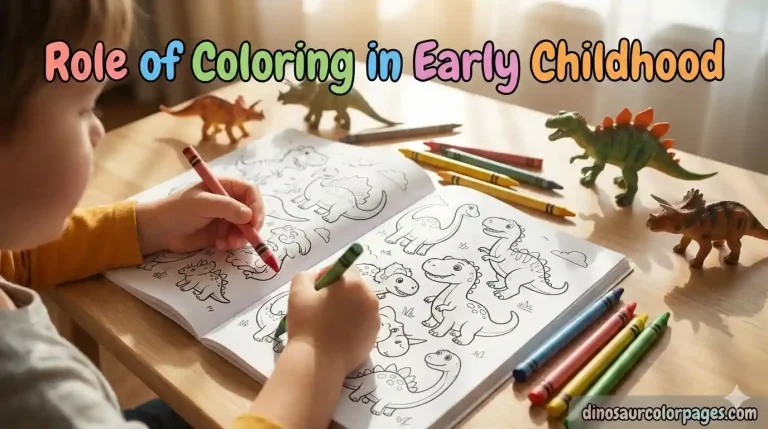
Using Coloring to Develop Language and Communication Skills: The Conversation Hidden in Every Crayon Box
Last Tuesday, I watched my three-year-old neighbor announce that her dog was “cerulean with magenta spots.” Her mom nearly dropped her coffee. The dog, for the record, is brown. But that moment? That was language development in full bloom, courtesy of a 64-pack of crayons and some serious imagination.
Here’s what nobody tells you about coloring: it’s basically a Trojan horse for language learning. You think you’re just keeping kids busy with some harmless scribbling, but actually, you’re running a full-scale vocabulary boot camp disguised as playtime. Using coloring to develop language and communication skills isn’t some newfangled educational theory—it’s an incredibly effective strategy that’s been hiding in plain sight on kitchen tables and classroom floors for decades.
Let me show you what I mean.
The Talk-While-You-Color Phenomenon
Think about the last time you colored with a kid. Did you sit in total silence? Of course not. Coloring is naturally conversational. There’s something about the low-pressure, hands-busy nature of the activity that opens up the floodgates of communication.
I’ve seen reserved kids who barely speak in circle time suddenly narrate entire epic adventures while coloring. I’ve watched toddlers with limited vocabulary stretch for new words to describe what they’re creating. I’ve observed bilingual children seamlessly code-switch between languages as they explain their color choices.
What’s happening here? You’re witnessing the magic of using coloring to develop language and communication skills through a perfect storm of conditions: low stress, high engagement, shared focus, and natural conversation starters.
The Science of Simultaneous Processing
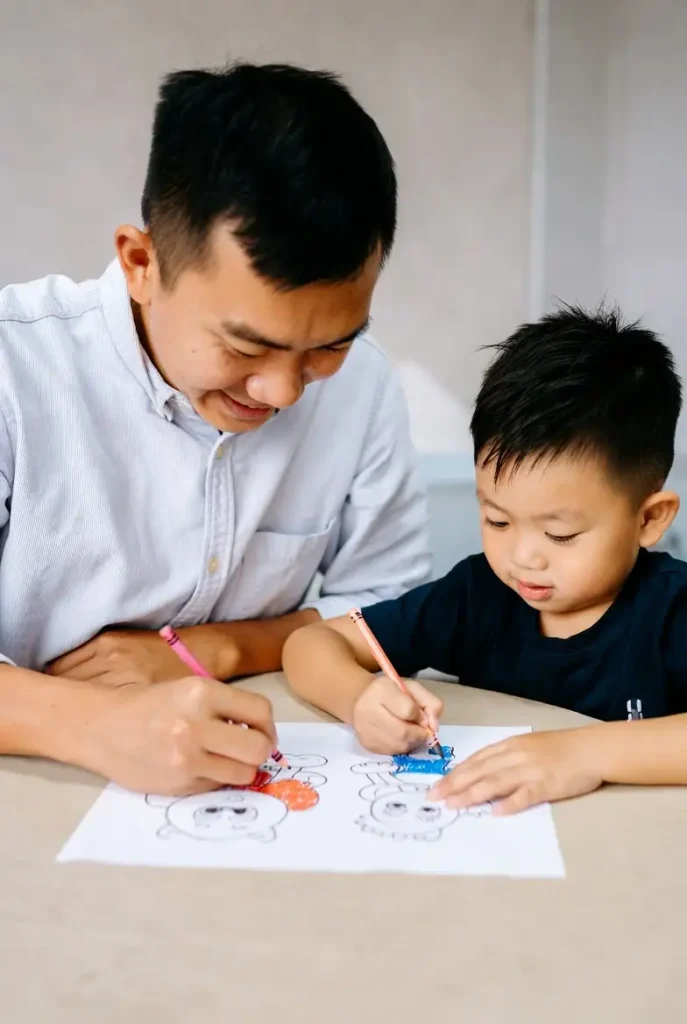
Dr. Jennifer Park, a speech-language pathologist I spoke with, explained it this way: “When children are engaged in a motor task like coloring, it actually reduces performance anxiety around speaking. Their conscious mind is focused on the physical activity, which allows language to flow more naturally.”
It’s like how some people think better while walking, or how your best ideas come in the shower. The brain works in mysterious ways, and sometimes the best path to language development isn’t through direct instruction—it’s through the side door while kids are busy with crayons.
Building Vocabulary One Color at a Time
Let’s start with the obvious: color words. But here’s where it gets interesting. Using coloring to develop language and communication skills goes way beyond “red, blue, green.”
The Color Vocabulary Pyramid
Level 1: Basic Colors Your standard eight-crayon box vocabulary. Red, blue, yellow, green, orange, purple, brown, black. These are the foundation, usually mastered between ages 2-4.
Level 2: Extended Colors Now we’re getting fancy. Pink, gray, turquoise, maroon, tan. This is where the 24-crayon box comes in clutch. Kids aged 4-6 start distinguishing and naming these variations.
Level 3: Descriptive Colors This is where language gets delicious. Sky blue, forest green, sunset orange, midnight black. We’re not just naming colors anymore—we’re connecting them to experiences and building associations.
Level 4: Sophisticated Color Vocabulary Cerulean, magenta, chartreuse, vermillion, ochre. These words make you sound like you went to art school, and kids absolutely love showing off with them.
I watched a five-year-old correct an adult: “That’s not light blue, it’s azure.” The pride on that kid’s face? Priceless. And that’s a vocabulary word they’ll never forget because they discovered it, claimed it, and used it in context.
Beyond Color: The Rich Language of Description
But using coloring to develop language and communication skills extends far beyond color names. Every coloring session is packed with opportunities for descriptive language:
Texture words: smooth, rough, bumpy, scratchy, soft, hard Size words: tiny, enormous, wide, narrow, thick, thin Position words: above, below, beside, between, inside, outside Action words: coloring, shading, blending, filling, outlining, scribbling Comparison words: darker, lighter, brighter, duller, more, less
Listen to a kindergarten class during coloring time, and you’ll hear this vocabulary in action. “I’m making the dinosaur darker than the sky.” “My butterfly has tiny dots inside the big circles.” “Can you color next to mine so we can make a pattern?”
That’s not just coloring. That’s sophisticated language construction happening in real time. It highlights the deeper role of coloring in childhood, where simple activities support multiple areas of development at once.
The Grammar Hiding in Plain Sight
Here’s something that blew my mind when a speech therapist pointed it out: using coloring to develop language and communication skills naturally teaches grammatical structures without a single worksheet.
Sentence Building Through Coloring
When kids describe their coloring, they’re constructing increasingly complex sentences:
Simple sentences (ages 2-3):
- “I color.”
- “Dog is brown.”
- “That’s red.”
Compound sentences (ages 3-4):
- “I’m coloring a house and it has a blue door.”
- “The sun is yellow but the clouds are white.”
Complex sentences (ages 4-6):
- “I’m making the ocean blue because that’s what color water is.”
- “After I finish the grass, I’m going to color the flowers that are growing in it.”
Compound-complex sentences (ages 5+):
- “I want to color the dragon green because green is my favorite color, and then I’ll add red fire that’s coming out of his mouth.”
Nobody’s drilling grammar rules here. Kids are just talking about what they’re doing, and in the process, they’re practicing increasingly sophisticated sentence structures.
Question Formation and Conversation Skills
Coloring naturally generates questions, and using coloring to develop language and communication skills means leveraging these authentic inquiries:
Questions kids ask while coloring:
- “What color should I make this?”
- “Can you help me decide which crayon to use?”
- “Do you like how I colored the cat?”
- “Why is the sky blue in real life?”
- “What would happen if I mixed these colors?”
Questions adults can ask to extend language:
- “Tell me about what you’re making.”
- “What will you color next?”
- “How did you decide on those colors?”
- “What’s happening in your picture?”
- “Where should we add more details?”
These back-and-forth exchanges teach conversational turn-taking, the art of asking and answering questions, and how to sustain a dialogue—all critical communication skills.
Narrative Skills: The Stories Within the Colors
One of the most powerful aspects of using coloring to develop language and communication skills is how it naturally encourages storytelling.
From Picture to Story
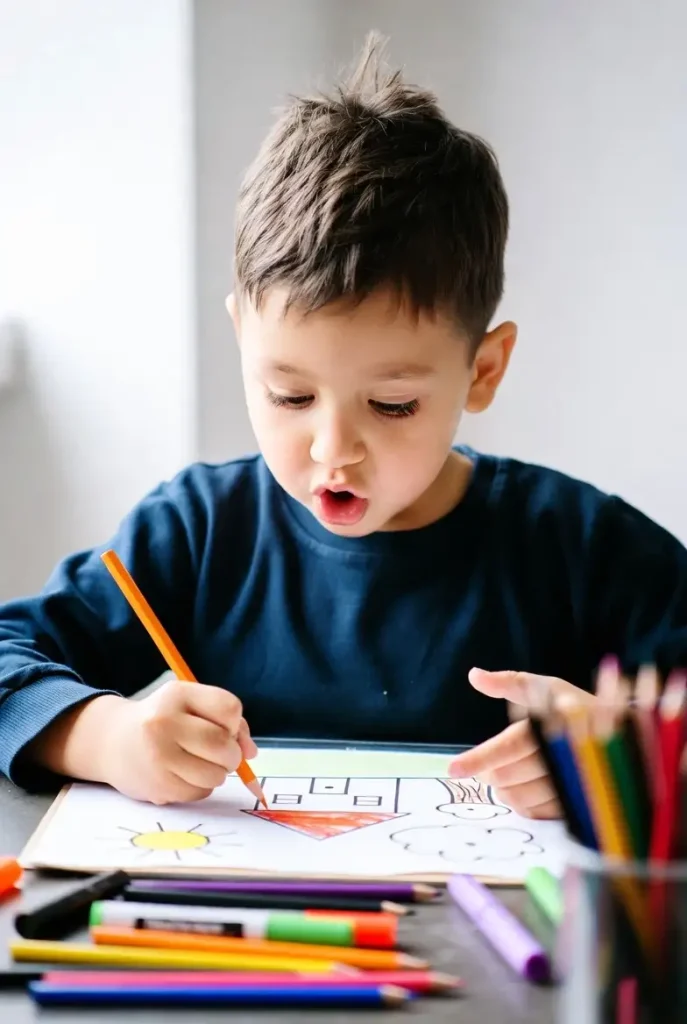
Hand a kid a coloring page with a scene, and you’re handing them a narrative waiting to be told. That’s not just a princess—that’s Princess Sparkle-Heart who lives in a castle made of candy and has a pet dragon named Fluffy who’s afraid of butterflies.
I’ve heard epic sagas unfold during coloring time. Multi-character dramas. Plot twists that would make soap opera writers jealous. Complex backstories for characters that are literally just outlines on paper.
This narrative development hits several language milestones:
Sequencing: “First the knight got on his horse, then he rode to the castle, and finally he saved the princess.”
Cause and effect: “The flowers are wilting because there’s no rain, so the girl is watering them.”
Character development: “This is Sammy the Squirrel, and he’s shy but also very brave when his friends need help.”
Setting description: “This house is in the woods where it’s very quiet and there are lots of trees and a little stream nearby.”
These are sophisticated narrative elements that form the foundation of both oral communication and later literacy skills.
Collaborative Storytelling
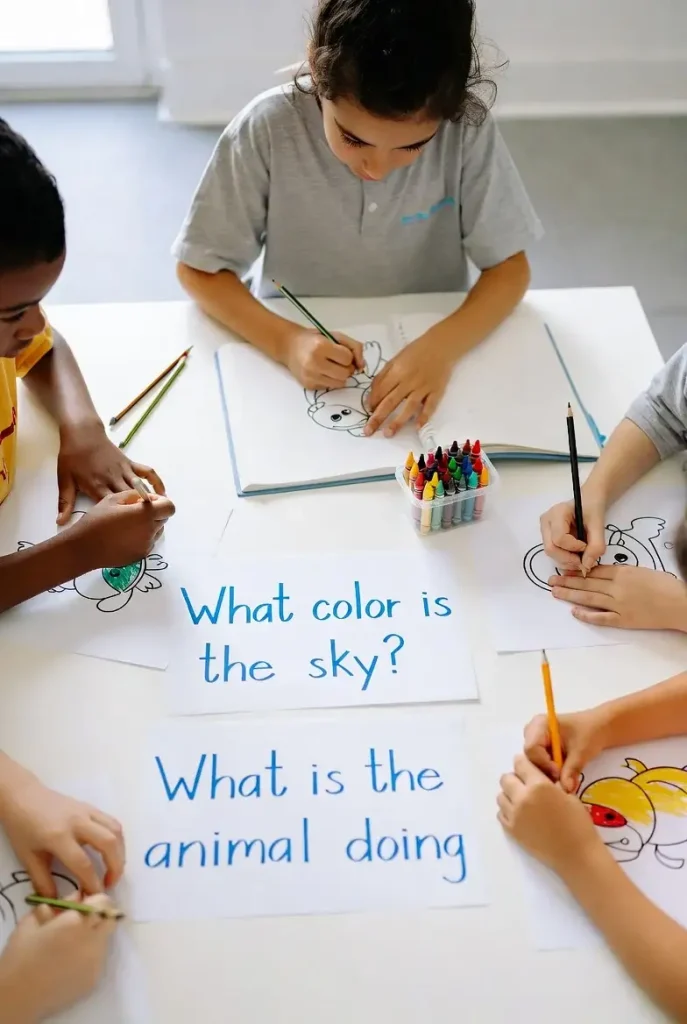
When multiple children color together, the language opportunities multiply. Using coloring to develop language and communication skills becomes a group activity where kids negotiate meaning, build on each other’s ideas, and co-construct narratives.
“Your spaceship can be going to the same planet as mine!”
“Let’s say they’re sisters and they both have magical powers.”
“What if the dinosaurs are friends and they’re having a party?”
This collaborative language use teaches:
- Negotiation skills
- Perspective-taking
- Idea elaboration
- Conflict resolution through words
- Cooperative communication
Practical Strategies for Maximizing Language Learning
Using coloring to develop language and communication skills works best when adults are intentional about creating rich language environments. Here’s how to make it happen.
The Parallel Talk Technique
This is gold for toddlers and preschoolers. You simply narrate what the child is doing as they color:
“You’re choosing the red crayon. Now you’re coloring the apple. You’re making big circular motions. Oh, now you’re pressing really hard to make the color darker.”
This technique:
- Models vocabulary in context
- Reinforces the connection between actions and words
- Doesn’t require the child to respond (low pressure)
- Provides repeated exposure to new words
The Self-Talk Method
Similar to parallel talk, but you narrate your own coloring:
“I think I’ll make this tree green. I’m starting at the top and coloring down. Oops, I went outside the line a little bit. That’s okay, I’ll keep going.”
Kids are listening, absorbing, and learning the language of process, decision-making, and self-correction.
Strategic Questioning
The questions you ask during coloring time matter. Using coloring to develop language and communication skills means asking questions that encourage extended responses:
Instead of: “What color is that?” Ask: “Why did you choose that color for the sky?”
Instead of: “Are you done?” Ask: “What part was the most fun to color?”
Instead of: “Is that a dog?” Ask: “Tell me about the animal you’re coloring.”
Open-ended questions generate more language output and more complex language structures.
Vocabulary Extension Activities
| Age Range | Activity | Language Skills Targeted |
|---|---|---|
| 2-3 years | Color matching game while coloring | Color vocabulary, following directions |
| 3-4 years | “I spy” with coloring pictures | Descriptive language, prepositions |
| 4-5 years | Story dictation about colored picture | Narrative skills, sequencing |
| 5-6 years | “Explain your process” discussion | Procedural language, complex sentences |
| 6+ years | Compare/contrast different colored versions | Analytical language, opinion expression |
Supporting Bilingual and Multilingual Learners
Here’s where using coloring to develop language and communication skills becomes particularly powerful: it’s language-neutral at its core. The activity itself doesn’t require verbal language to participate, which makes it perfect for language learners.
Code-Switching Opportunities
For bilingual kids, coloring time often becomes a natural space for code-switching—moving fluidly between languages. “I’m going to use the rojo crayon to color the heart because corazones are usually red.”
This isn’t confusion—it’s linguistic sophistication. Support it by:
- Acknowledging both languages positively
- Providing color names in both languages
- Letting the child choose which language to use
- Building vocabulary in their stronger language first
Visual Support for Language Learning
For kids learning English (or any new language), coloring provides crucial visual support for vocabulary development. When you say “lion” while pointing to the lion they’re coloring, they’re getting multi-sensory input: the word, the visual representation, and the tactile experience of coloring it.
This is way more effective than flashcards because it’s meaningful, contextual, and engaging.
Special Considerations for Different Communication Needs
Using coloring to develop language and communication skills is beautifully inclusive because it can be adapted for kids with varying abilities.
For Children with Speech Delays
Coloring reduces pressure to speak while still encouraging communication. A child who struggles with verbal expression might:
- Point to colors instead of naming them (still communicating!)
- Use single words or short phrases (appropriate starting point)
- Respond non-verbally by showing their work (valid communication)
- Take their time formulating responses without feeling rushed
The key is celebrating all forms of communication, not just fluent speech.
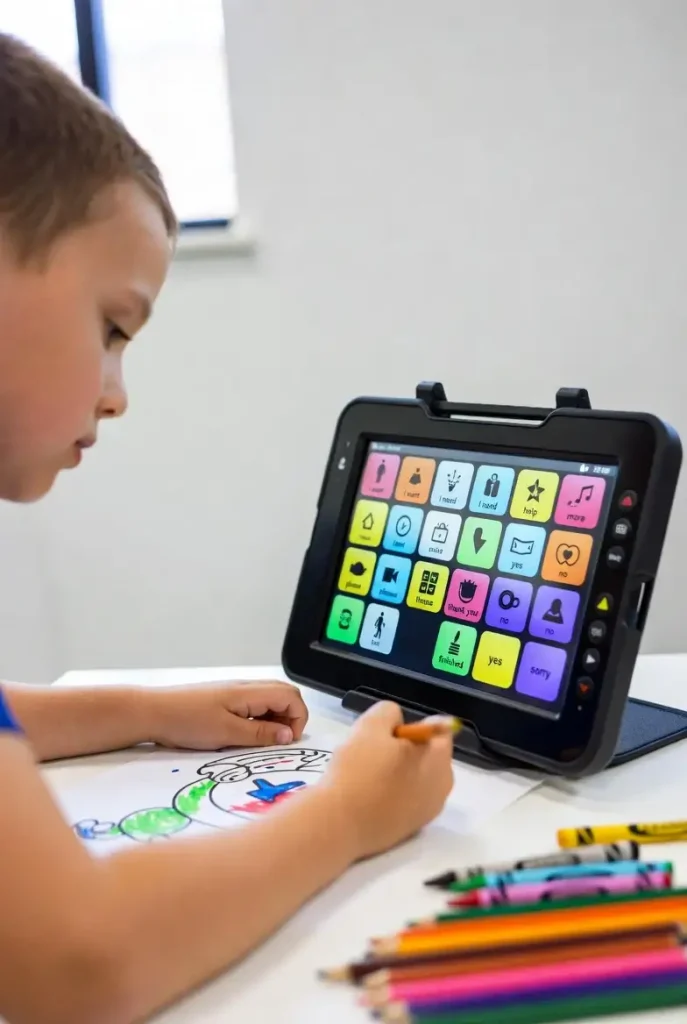
For Non-Verbal Communicators
Kids who don’t use verbal speech can still benefit from using coloring to develop language and communication skills by:
- Developing receptive language (understanding vocabulary)
- Using AAC (augmentative and alternative communication) devices to share about their coloring
- Communicating through color choices and artistic decisions
- Participating in shared activities that build social connection
For Children with Autism
Many children with autism find coloring to be a preferred activity, and it offers unique opportunities for communication development:
- Predictable, structured activity reduces anxiety
- Clear beginning and end
- Sensory input that’s often calming
- Topic of conversation that’s concrete and visual
- Social interaction opportunity without demanding eye contact
I’ve worked with kids on the spectrum who were more verbal during coloring time than during any other activity. Something about the combination of structure and creativity creates a communication-friendly environment.
The Literacy Connection
Using coloring to develop language and communication skills isn’t just about talking—it’s laying groundwork for reading and writing.
Oral Language as Literacy Foundation
Research is crystal clear on this: oral language skills predict literacy success. Kids with rich vocabularies and strong narrative skills become better readers and writers. Coloring conversations contribute directly to this foundation by:
- Building vocabulary (more words to decode later)
- Developing syntax (understanding sentence structure)
- Practicing narrative structure (beginning, middle, end)
- Strengthening descriptive language (useful for writing)
Print Awareness Through Coloring
Coloring books and pages often include words—titles, labels, instructions. This creates natural opportunities to point out:
- Letters and words
- Print directionality (left to right, top to bottom)
- Connections between words and pictures
- The idea that written words carry meaning
“See, it says ‘butterfly’ right here at the top. Can you find the letter ‘B’? That’s the same letter that starts your name!”
Writing Motivation
Kids who love coloring often become kids who love drawing, which leads to kids who want to write. That progression looks like:
- Scribbling and coloring
- Drawing recognizable pictures
- Adding “pretend writing” to pictures
- Asking how to spell words to label drawings
- Writing stories to accompany pictures
Using coloring to develop language and communication skills naturally evolves into using art to develop literacy skills.
Creating a Language-Rich Coloring Environment
The space and materials you provide matter when using coloring to develop language and communication skills.
Setting Up for Success
Materials that encourage talk:
- Coloring books with story scenes (not just isolated objects)
- Character-based coloring pages (prompts narrative)
- Themed sets (animals, vehicles, seasons—builds categorical vocabulary)
- Labeled storage (“Put the markers in the marker box”—functional vocabulary)
Space considerations:
- Table where multiple people can color together
- Easy access so kids can initiate coloring independently
- Display area for finished work (prompts “tell me about this” conversations)
- Good lighting (makes colors vibrant, inspires more descriptive language)
The Power of Routine Coloring Time
When coloring becomes a regular routine, language benefits compound. Daily coloring time creates:
- Predictable opportunities for conversation
- Ongoing narratives (“Remember yesterday when you were coloring the castle? What happened to the princess?”)
- Vocabulary review and reinforcement
- Safe, low-pressure communication practice
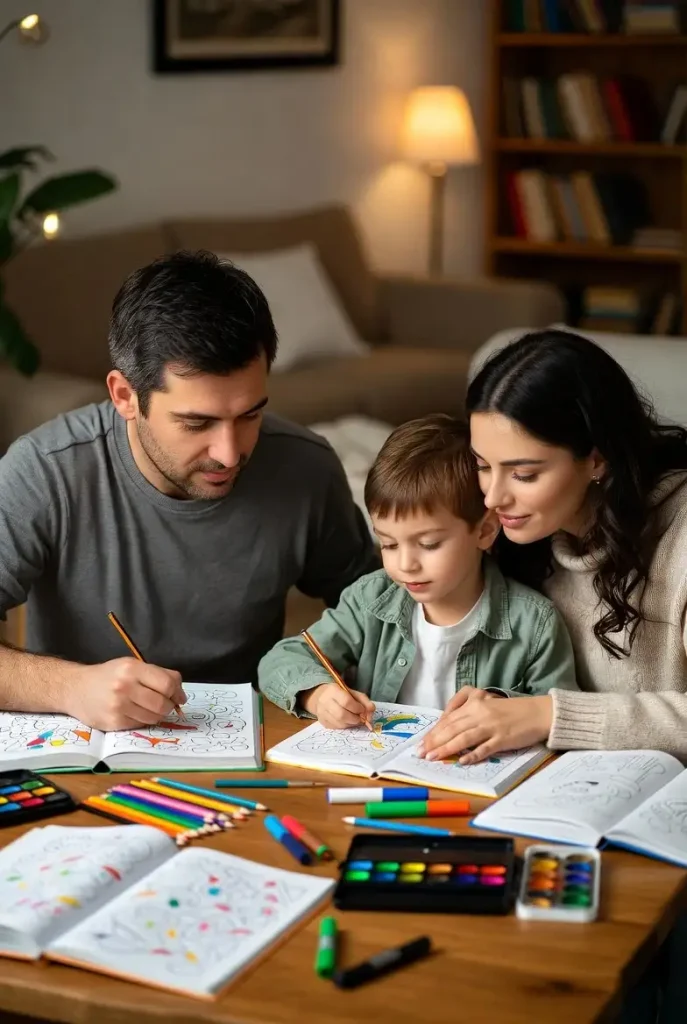
I know families who color together every evening after dinner. Twenty minutes of coloring, talking, and connecting. The language development happens organically, but the impact is measurable.
Real Talk: When Coloring Gets Quiet
Let’s address the elephant in the room. Sometimes kids just want to color in peace. And that’s okay.
Using coloring to develop language and communication skills doesn’t mean you need to turn every coloring session into a language lesson. Sometimes kids need quiet time. Sometimes they’re processing internally. Sometimes they just want to zone out with a crayon.
The key is balance. Most coloring time should involve some conversation, but it’s totally fine to have some sessions where you sit together in comfortable silence, maybe with soft music playing, just enjoying the shared activity without words.
Even silent coloring sessions build language indirectly by:
- Developing focus needed for listening later
- Processing visual information (connected to reading)
- Building internal narrative (thinking about what they’re creating)
- Strengthening the relationship that makes future communication easier
Tracking Progress Without Pressure
If you’re intentionally using coloring to develop language and communication skills, you might want to notice progress. But keep it casual.
What to Listen For
Over weeks and months, you might notice:
- Expanding vocabulary (using new color words, descriptive terms)
- Longer utterances (moving from single words to phrases to sentences)
- More complex grammar (using conjunctions, multiple clauses)
- Better conversation skills (turn-taking, staying on topic)
- Increased confidence (initiating conversation, asking more questions)
- Richer narratives (more details, more complexity)
Document this informally. Take videos of coloring conversations. Save particularly story-rich colored pictures with notes about what the child said. But don’t turn it into a test or assessment—that defeats the low-pressure magic that makes coloring such an effective language development tool.
The Social Language Component
Using coloring to develop language and communication skills extends into pragmatics—the social rules of language use.
Learning Conversational Rules
Coloring time teaches:
- Turn-taking: “Now it’s your turn to choose a color”
- Topic maintenance: Staying on the subject of what’s being colored
- Topic introduction: “Can we talk about something while we color?”
- Clarification requests: “What do you mean by ‘make it fancy’?”
- Perspective-taking: “Oh, you see it as a rocket ship. I thought it was a tall building.”
These pragmatic skills are crucial for social success and often challenging for kids to learn. Coloring provides a natural, low-stakes context for practice.
Conflict Resolution Through Words
When two kids both want the red crayon, that’s not a problem—it’s a language learning opportunity. They need to:
- Express their desire (“I want to use red”)
- Negotiate (“How about you use it first, then me?”)
- Compromise (“We could share it” or “Maybe I’ll use orange instead”)
- Use polite language (“May I please have it when you’re done?”)
Adults can scaffold this: “I hear you both want red. What are some ways we could solve this problem using our words?”
Extending Beyond the Coloring Table
Using coloring to develop language and communication skills doesn’t end when the crayons get put away.
Post-Coloring Conversations
The picture your child just colored becomes a conversation starter for days:
- Displayed on the fridge: “Tell Grandma about your picture when she calls”
- In their room: “Remember when you colored this? What were you thinking about?”
- In a portfolio: “Let’s look through your old coloring and you can tell me which was your favorite”
Connecting to Other Activities
The vocabulary and language patterns developed during coloring transfer everywhere:
- At the park: “Look at those cerulean blue flowers!”
- Reading books: “This character looks like the one you colored yesterday”
- During play: “Should we build a castle like the one in your coloring book?”
- At meals: “These carrots are the same orange color you used for the pumpkin”
This transfer and generalization is where real language development happens—when kids take the words they learned during coloring and use them in new contexts.
The Bottom Line: Crayons Are Communication Tools
Using coloring to develop language and communication skills isn’t complicated. You don’t need special training or expensive materials or a structured curriculum. You just need:
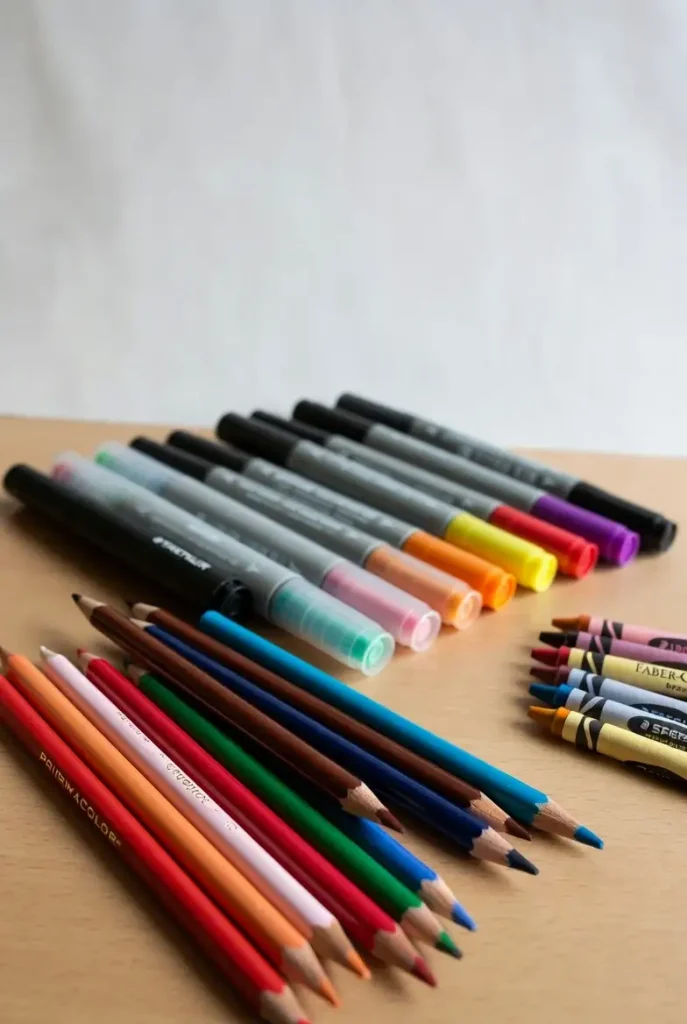
- Coloring supplies
- Time together
- Willingness to talk, listen, and engage
- Curiosity about what kids are thinking and creating
Every time a child says “I’m making this purple because I think it should be magic,” they’re not just explaining a color choice—they’re constructing complex sentences, expressing opinions, explaining reasoning, and using abstract concepts. That’s sophisticated language in action.
Every time you ask “What’s happening in your picture?” and a child launches into a five-minute narrative complete with character motivations and plot twists, you’re witnessing oral language development that will later translate to writing skills, reading comprehension, and academic success.
The magic of using coloring to develop language and communication skills is that it doesn’t feel like “learning” to kids. It feels like fun. It feels like making art. It feels like special time with a grown-up or sharing crayons with a friend.
But underneath all that? Serious language development is happening. Vocabulary is expanding. Grammar is solidifying. Narrative skills are strengthening. Communication confidence is growing.
Your Next Steps
Ready to harness the power of coloring for language development? Here’s where to start:
- Set up a dedicated coloring space with a variety of materials
- Schedule regular coloring time (even 15 minutes daily makes a difference)
- Color alongside kids and engage in genuine conversation
- Ask open-ended questions that encourage extended responses
- Introduce new vocabulary naturally during coloring discussions
- Listen more than you talk (kids need airtime to develop language)
- Celebrate all communication attempts, verbal and non-verbal
- Follow the child’s lead in topics and interests
- Make it pressure-free—fun conversation, not interrogation
- Notice progress over time without turning it into assessment
And remember: every crayon mark is a potential conversation starter. Every color choice is an opportunity for vocabulary. Every finished picture is a story waiting to be told.
Using coloring to develop language and communication skills is one of the simplest, most enjoyable, most effective strategies available to parents and educators. It requires no special expertise, costs almost nothing, and works for kids across a wide range of ages and abilities.
So grab some crayons, sit down with a kid, and start coloring. Then ask them about it. Listen to what they say. Respond with interest. Add a new vocabulary word here and there. Follow their narrative tangents. Enjoy the conversation.
You’re not just coloring. You’re building communicators, one crayon stroke at a time.