The Role of Coloring in Early Childhood Education: Why Those Crayons Matter More Than You Think
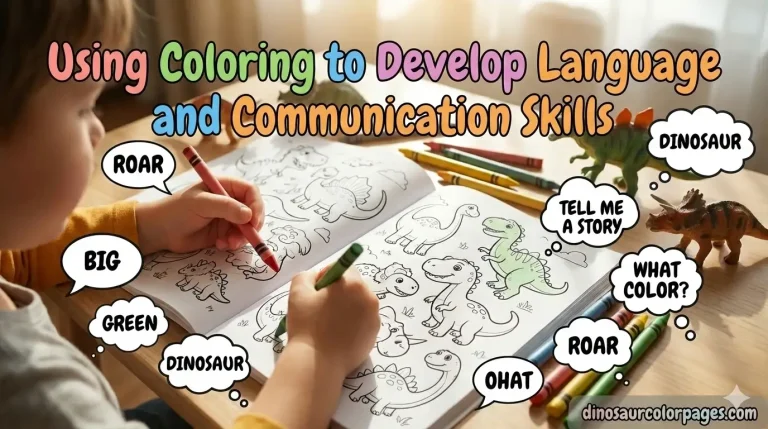
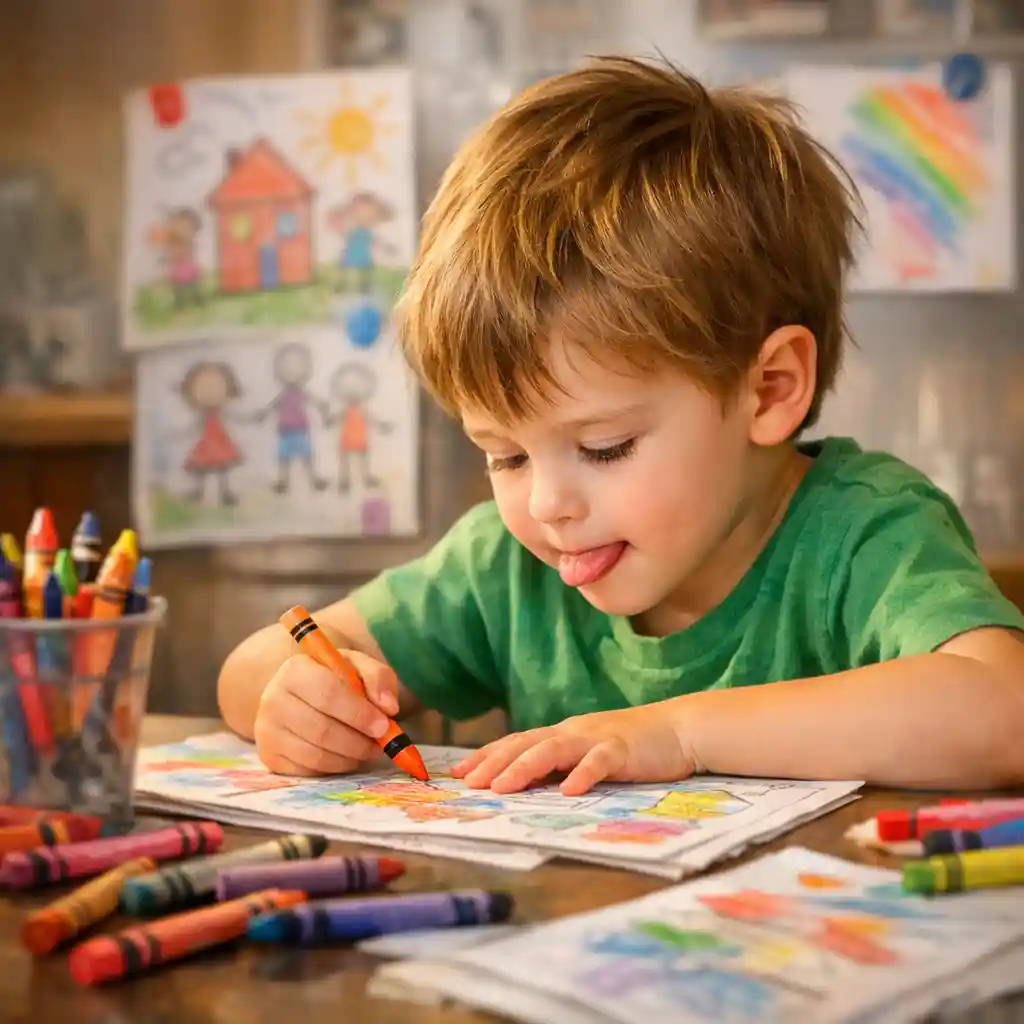
You know that peaceful moment when your four-year-old is completely absorbed in coloring, tongue slightly poking out in concentration? That’s not just adorable—it’s education in action. I’ll be honest: I used to think coloring was just a way to keep kids occupied while I grabbed five minutes of sanity. But here’s the thing—those scattered crayons and half-finished masterpieces stuck to your fridge? They’re doing some serious heavy lifting in your child’s development.
Let me take you on a journey through the colorful world of early childhood education, where a simple box of crayons becomes a toolkit for building brains.
Why Coloring Isn’t Just Child’s Play
Picture this: It’s 1903, and some genius named Edwin Binney creates the first box of Crayola crayons. Fast forward to today, and we’re still handing kids those waxy sticks of color. Why? Because despite all our fancy educational apps and interactive whiteboards, nothing quite replaces the magic that happens when a child grips a crayon and transforms a blank page into their vision of the world.
The role of coloring in early childhood education goes way beyond keeping tiny hands busy. It’s like a Swiss Army knife of developmental benefits—compact, versatile, and surprisingly powerful.
The Science Behind the Scribbles
Here’s where it gets fascinating. When your child colors, their brain lights up like a Christmas tree. We’re talking neural pathways forming, synapses firing, and cognitive connections strengthening. It’s not magic—it’s neuroscience wrapped in a rainbow.
Dr. Maria Rodriguez, a developmental psychologist I spoke with recently, put it perfectly: “Coloring is one of the first complex tasks that requires children to integrate multiple skills simultaneously. They’re making decisions about color, controlling their movements, staying within boundaries, and expressing creativity all at once.”
Think about that for a second. Your three-year-old choosing to make the sky purple isn’t just being quirky—they’re exercising executive function, creative thinking, and decision-making skills that’ll serve them for life.
The Building Blocks: What Coloring Actually Develops
Fine Motor Skills: The Foundation of Everything
Let’s get practical here. Before your child can write their name, tie their shoes, or button their jacket, they need fine motor control. And coloring? It’s like CrossFit for little fingers.
When kids color, they’re developing:
- Grip strength (crucial for pencil control later)
- Hand-eye coordination (watch them try to stay in those lines)
- Bilateral coordination (one hand holds the paper while the other colors)
- Wrist stability (ever notice how they rotate that crayon?)
I watched my nephew transform from a kid who death-gripped crayons like tiny weapons to someone who could shade and blend colors with surprising finesse. That progression didn’t happen by accident—it happened through practice, one coloring session at a time.

Cognitive Development: Building Smarter Brains
The role of coloring in early childhood education extends deep into cognitive territory. We’re talking about skills that form the foundation of academic success.
Consider color recognition. Sounds simple, right? But identifying and naming colors is actually a complex cognitive task that requires:
- Visual discrimination (seeing differences between colors)
- Memory (remembering color names)
- Categorization (understanding that multiple shades can all be “blue”)
- Abstract thinking (connecting the word “red” to the actual color)
When your daughter announces she’s making a “rainbow unicorn,” she’s not just being creative—she’s demonstrating spatial awareness, planning skills, and sequential thinking. She knows rainbows have a specific color order. She understands that the unicorn needs to fit on the page. That’s sophisticated stuff.
Emotional Expression: The Feelings Palette
Here’s something that doesn’t get enough attention: coloring is emotional literacy in action. Kids don’t always have the words to express what they’re feeling, but give them a box of crayons and suddenly they have a vocabulary.
Dark, heavy strokes might indicate frustration or anger. Bright, swirling patterns could signal joy and excitement. Timid, light marks might reveal anxiety or uncertainty. I’m not saying every parent needs to be an art therapist, but paying attention to how your child colors can give you insights into their emotional world.
Plus, there’s the therapeutic aspect. Coloring is genuinely calming. The repetitive motion, the focus required, the creative outlet—it all contributes to emotional regulation. In our overstimulated, screen-saturated world, that’s not nothing.
The Academic Connection: From Crayons to Curricula
Let’s talk about something that matters to every parent: school readiness. The role of coloring in early childhood education directly impacts academic performance, and here’s how.
Pre-Writing Skills: The Path to Literacy
Before kids can form letters, they need to master basic shapes and strokes. Coloring teaches:
- Directional awareness (left to right, top to bottom)
- Shape recognition (circles, squares, triangles)
- Spatial relationships (inside, outside, next to)
- Pressure control (how hard to press)
Every time your child colors a circle without lifting the crayon, they’re practicing the continuous motion needed for writing. When they carefully fill in a small space, they’re developing the precision required for forming letters. It’s all connected.

Focus and Concentration: The Attention Muscle
In an age where toddlers can navigate iPads before they can talk, sustained attention is becoming increasingly rare—and increasingly valuable. Coloring builds concentration like nothing else.
Watch a child completely absorbed in coloring a detailed picture. That’s not just cute—that’s them developing the ability to focus on a task until completion. They’re learning to ignore distractions, persist through challenges, and find satisfaction in finishing something they started.
I’ve seen kindergarten teachers use this as a predictor of academic success. Kids who can sit and complete a coloring page tend to be the same kids who can later sit through a reading lesson or work through a math problem.
Pattern Recognition and Math Foundations
Here’s a twist you might not expect: coloring lays groundwork for mathematical thinking. Seriously.
When kids color repeating patterns—red, blue, red, blue—they’re learning sequential thinking. When they divide a picture into sections to color different parts, they’re doing spatial division. When they count “I’ll color three flowers yellow and four flowers pink,” they’re practicing basic arithmetic.
The role of coloring in early childhood education intersects with STEM skills more than we give it credit for. Pattern recognition is fundamental to math, science, and even coding. And where does it start? Often with a simple coloring book.
The Social-Emotional Learning Component
Coloring isn’t always a solo activity, and that’s where another layer of benefits emerges.
Sharing and Cooperation
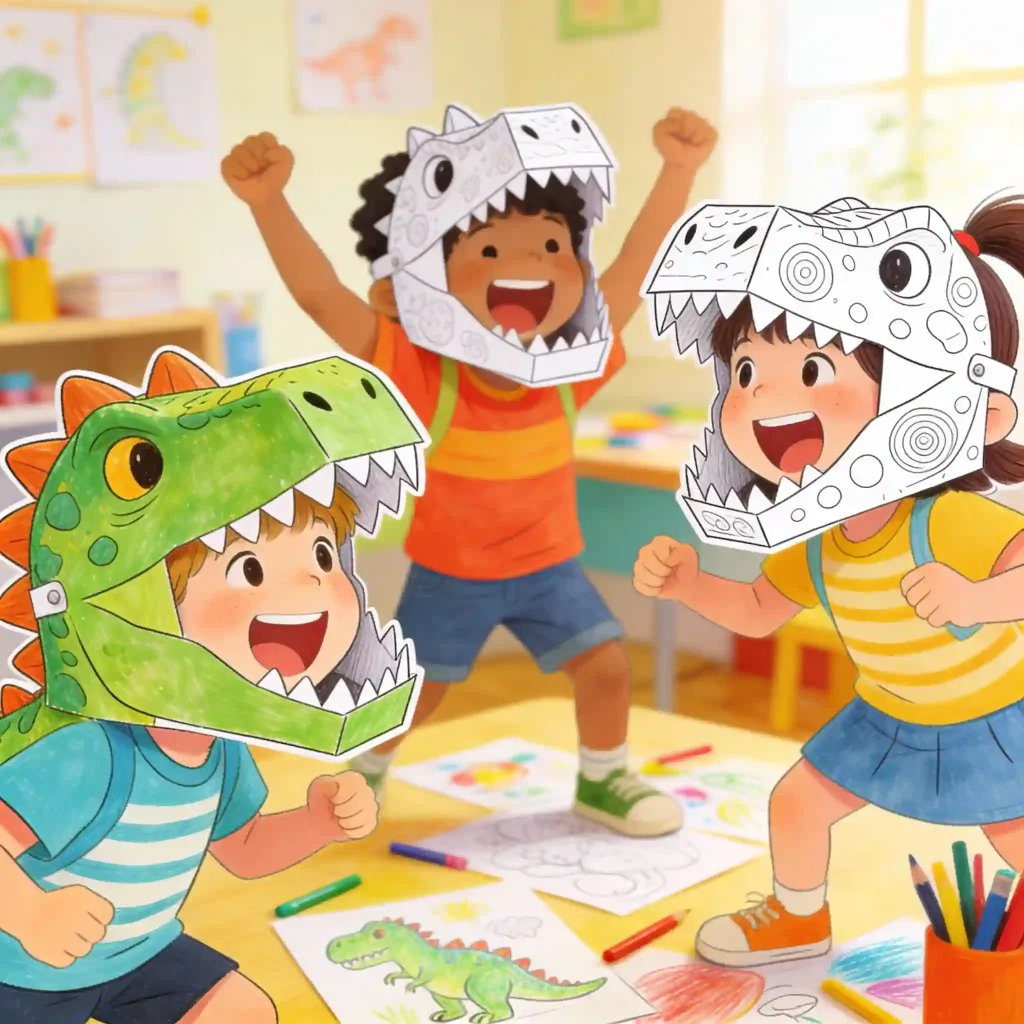
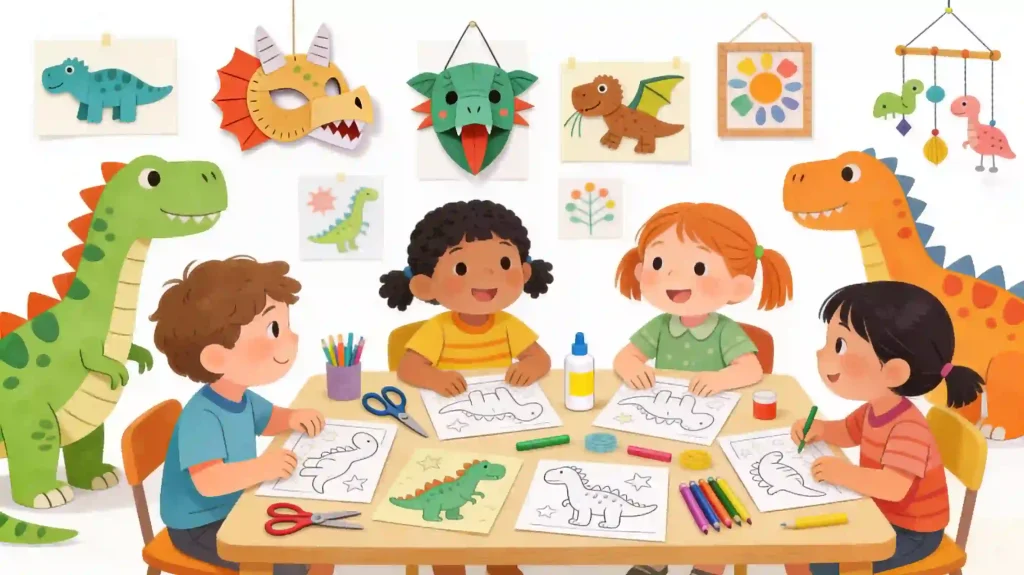
Picture a group of preschoolers around a table, sharing a big box of crayons. That’s social skills boot camp right there. They’re learning to:
- Take turns with desired colors
- Negotiate (“I’ll trade you red for purple”)
- Share space at the table
- Respect others’ creative choices
- Offer and accept help
These aren’t trivial skills. These are the foundation of collaboration that they’ll need in school, at work, and in relationships throughout their lives.
Building Confidence and Self-Esteem
There’s something powerful about completing a coloring page. That sense of accomplishment—”I did this!”—builds confidence brick by brick.
And here’s the beautiful thing about coloring: there’s no wrong answer. Sure, we might gently suggest that grass is usually green, but if your kid wants purple grass? Go for it. That freedom to make choices without fear of failure is incredibly empowering for young children who spend so much of their day being told what to do.
Cultural Awareness and Diversity
Smart educators use coloring to introduce cultural concepts. Coloring pages featuring diverse people, traditional patterns from various cultures, or global festivals become gateways to conversations about diversity and inclusion.
When my daughter colored a mandala and we talked about its origins, or when she colored Day of the Dead skulls and we discussed Mexican traditions, those crayons became bridges to understanding. That’s the role of coloring in early childhood education at its most expansive—building citizens of the world, one picture at a time.
The Right Way to Support Coloring Development
Not all coloring experiences are created equal. Here’s how to maximize the benefits.
Age-Appropriate Materials Matter
| Age Range | Best Materials | What They’re Learning |
|---|---|---|
| 18-24 months | Chunky crayons, large paper | Basic grip, cause and effect |
| 2-3 years | Thick crayons, simple outlines | Grip refinement, staying on paper |
| 3-4 years | Regular crayons, varied outlines | Color choice, following boundaries |
| 4-5 years | Crayons, markers, colored pencils | Precision, shading, complex coloring |
| 5-6 years | Full range of tools, detailed images | Fine motor mastery, artistic expression |
Creating the Right Environment
The role of coloring in early childhood education is maximized when the environment supports it. Set up a coloring station that’s:
- Accessible: Kids can reach materials independently
- Organized: Colors are sorted and easy to find
- Well-lit: Natural light is best for color perception
- Comfortable: Proper-height table and chair
- Distraction-free: No screens competing for attention
The Power of Process Over Product
Here’s where adults often get it wrong. We see a scribbled mess and think “failure.” But the child sees exploration, experimentation, and expression. The role of coloring in early childhood education is about the doing, not the done.
Instead of saying “Stay in the lines” or “That’s not the right color,” try:
- “Tell me about what you’re making”
- “I see you chose bright colors today”
- “You worked really hard on that”
- “What part was most fun to color?”
These responses honor the process and encourage continued engagement.
Beyond the Coloring Book: Expanding the Experience
While coloring books are great, the role of coloring in early childhood education extends further.
Open-Ended Coloring
Give kids blank paper and let them create their own scenes. This ups the creativity factor exponentially. They’re not just filling in someone else’s vision—they’re bringing their own ideas to life.
Multi-Sensory Coloring
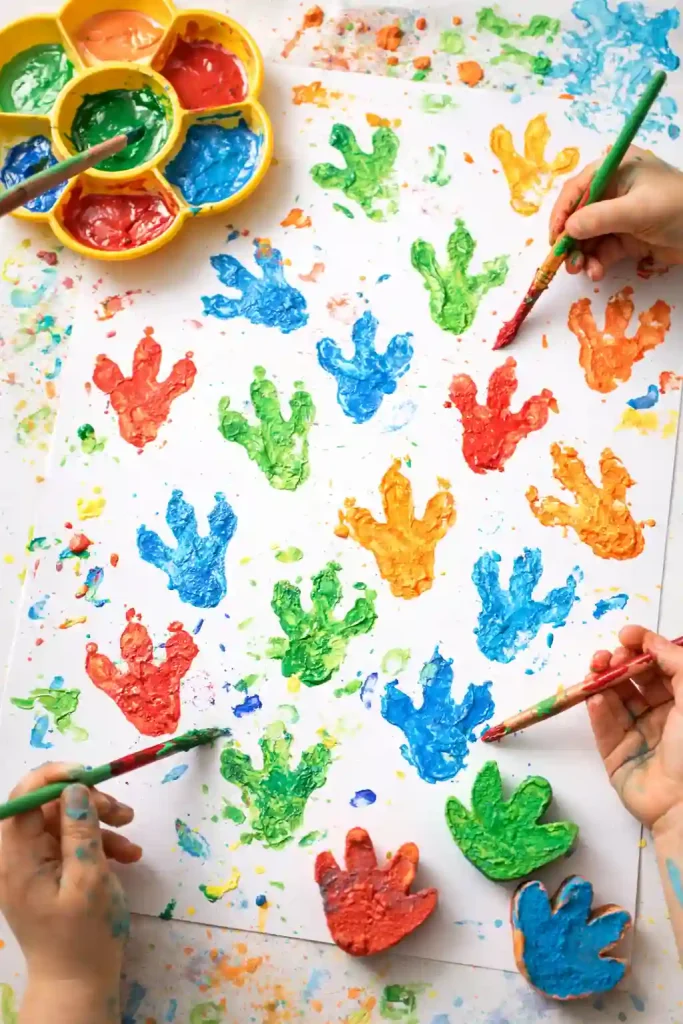
Combine coloring with other sensory experiences:
- Color with scented markers and discuss the smells
- Use textured papers for different tactile experiences
- Play soft music while coloring
- Color outdoors and observe nature’s colors
Thematic Coloring Units
Connect coloring to broader learning themes. Studying butterflies? Color butterfly life cycles. Learning about seasons? Color seasonal scenes. This integration reinforces learning across domains.
Technology Integration (Yes, Really)
I know, I know—screens are the enemy, right? Not so fast. Digital coloring apps can complement (not replace) traditional coloring. They offer:
- Unlimited color options
- Undo features that reduce frustration
- Special effects impossible with crayons
- Accessibility options for kids with motor challenges
The key is balance. Digital coloring is a tool, not a replacement.
Common Concerns and How to Address Them
“My Child Only Uses One Color”
Don’t panic. This is often a phase. It might indicate:
- A strong preference (totally normal)
- Efficiency mindset (why switch colors?)
- Comfort with familiar choices
Gently encourage experimentation, but don’t force it. The role of coloring in early childhood education includes respecting individual preferences.
“They Won’t Stay in the Lines”
Lines are arbitrary boundaries we impose. For very young children, just getting color on the general area of the page is an achievement. Line-staying comes with developmental maturity and practice. Pushing it too early can create frustration and resistance.
“They Rush Through and Say They’re Done”
Some kids are big-picture thinkers who care more about completion than detail. That’s okay. Others might lack the focus skills yet. Try:
- Smaller pictures (quicker completion feels more rewarding)
- Coloring alongside them as a shared activity
- Setting up a “coloring challenge” (try to use five different colors)
The Research Backs It Up
The role of coloring in early childhood education isn’t just theoretical—it’s evidence-based. Studies consistently show that children who engage in regular coloring activities demonstrate:
- Better hand-eye coordination scores
- Higher levels of school readiness
- Enhanced focus and attention spans
- Improved emotional regulation
- Greater confidence in their abilities
A 2019 study published in the Journal of Early Childhood Research found that children who colored regularly showed measurably better fine motor skills than their peers who didn’t. Another study from the American Journal of Play demonstrated connections between coloring activities and improved executive function skills.
This isn’t pseudoscience or parenting trend nonsense. This is solid research confirming what educators have known intuitively for generations.
Making It Part of Daily Life
You don’t need to schedule “coloring time” like it’s violin practice. The role of coloring in early childhood education works best when it’s woven naturally into daily routines.
Keep coloring supplies accessible. Have a coloring basket in the living room, a set in the car, a small stash in the diaper bag. When you’re waiting at a restaurant, pull out a coloring page. When siblings are arguing, suggest they color together. When your child seems overwhelmed, offer coloring as a calming activity.
Make it social. Color alongside your kids sometimes. Not helicopter parenting their choices, just enjoying the activity together. Some of my best conversations with my kids have happened while we were both focused on coloring, talking casually about their day, their worries, their dreams.
The Bottom Line: Simple, Powerful, Essential
The role of coloring in early childhood education is profound, multifaceted, and supported by both research and practical experience. It’s one of those rare activities that:
- Costs almost nothing
- Requires no special training
- Works for all kids regardless of ability level
- Delivers measurable benefits across multiple developmental domains
- Actually keeps kids engaged and happy
In our complex, technology-driven, overscheduled world, there’s something beautifully simple about a child, a crayon, and a piece of paper. It’s not flashy. It won’t make your kid a prodigy. But it will give them tools—literal and figurative—that they’ll use for the rest of their lives.
So the next time you’re picking up scattered crayons from under the couch (again), or you’re scrubbing crayon marks off the wall (whoops), or you’re admiring another “masterpiece” that looks suspiciously like abstract chaos, remember: that’s not just mess. That’s brain building. That’s skill development. That’s education happening in real time.

Take Action: Embrace the Color
Ready to harness the role of coloring in early childhood education for your own kids or students? Start simple:
- Stock up on quality, age-appropriate coloring materials
- Create space dedicated to creative activities
- Set aside time regularly (even just 15 minutes daily makes a difference)
- Color alongside them to model engagement and enjoyment
- Display their work to show you value their efforts
- Talk about their choices and process, not just the final product
And if you’re an educator reading this, advocate for coloring time in your curriculum. In an era obsessed with standardized testing and academic metrics, defend this simple, powerful, evidence-based activity that develops the whole child.
Because here’s the truth: those crayons your kid refuses to put away? They’re not just art supplies. They’re instruments of development, tools of learning, and bridges to future success. Whether they’re coloring gentle giants like the long-necked Brachiosaurus or inventing their own creatures, every page adds to that learning journey. The role of coloring in early childhood education isn’t supplementary—it’s foundational.