Dinosaur Pattern Matching Worksheets
Patterns are one of those quiet skills that show up everywhere once you start noticing them. On a shirt. On the floor tiles. In the rhythm of a song. Kids pick up on patterns naturally, even before we formally teach them.
Now add dinosaurs to the mix and suddenly a simple learning activity feels a lot more exciting.
Dinosaur Pattern Matching Worksheets combine early math practice with something children already love. Instead of lining up plain shapes or colored blocks, they match dinosaur eggs, footprints, spikes, or little cartoon dinos in repeating sequences. It feels playful. It feels familiar. And underneath it all, real learning is happening.
At dinosaurcolorpages.com, activities like this are meant to be simple to use and easy to understand. No complicated setup. Just meaningful practice wrapped in something fun.
Why Pattern Recognition Matters in Early Learning
Pattern recognition is one of the foundations of math. Before children add or subtract, they learn to notice repetition. Red, blue, red, blue. Big, small, big, small. Triangle, circle, triangle, circle.
When kids complete patterns, they are learning to predict what comes next. That ability to anticipate and reason logically supports problem solving later on. It strengthens critical thinking in a quiet, steady way.
There is also a confidence boost that comes with it. When a child figures out what belongs in the empty space, you can see it on their face. That small spark of “I got it” is worth a lot.
What Are Dinosaur Pattern Matching Worksheets
These worksheets focus on repeating sequences using dinosaur themed images. Instead of abstract symbols, children might see:
- Dinosaur footprints in alternating sizes
- Different dinosaur species repeating in a sequence
- Spotted and striped dinosaur eggs in a pattern
- Triangles and circles arranged to look like dinosaur spikes
The task is simple. Look at the pattern. Figure out what comes next. Match or draw the missing piece.
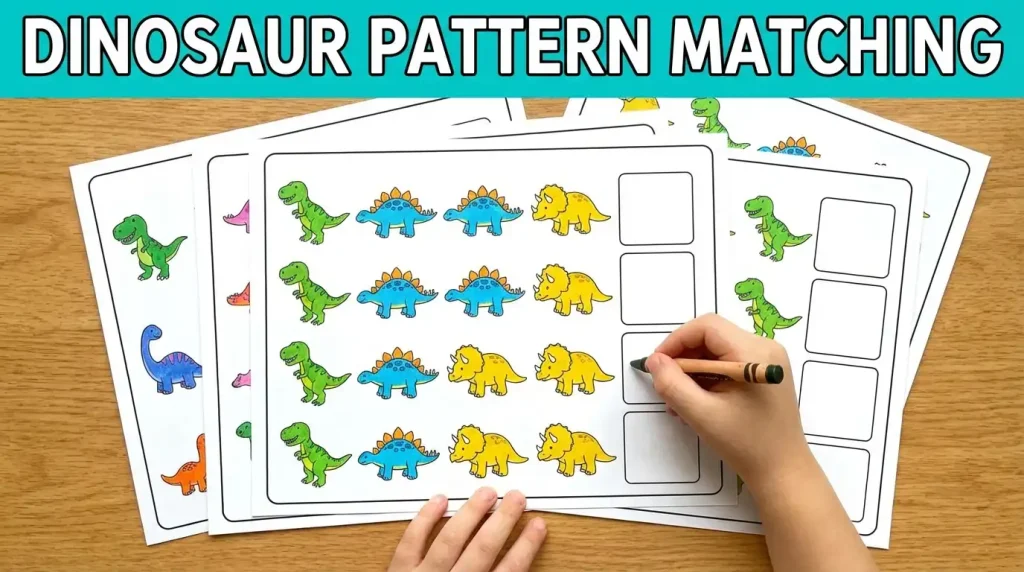
Some pages are straightforward, using two repeating elements. Others add a third element to make it slightly more challenging. The progression feels natural. It builds skill without overwhelming younger learners.
Skills Kids Build Along the Way
Pattern matching might seem like a small activity, but it supports several important developmental areas.
Logical Thinking
When children identify what comes next in a sequence, they are practicing reasoning. They are analyzing what they see and making a decision based on that information. That is early problem solving in action.
Visual Discrimination
Spotting differences between similar dinosaur images strengthens visual processing. A small change in color or shape becomes something they learn to notice quickly.
Attention and Focus
Completing a pattern requires careful observation. Kids slow down. They look closely. They compare. That kind of focused attention carries over into reading and other classroom tasks.
Early Math Foundations
Patterns are closely connected to counting, sorting, and algebraic thinking later on. It sounds advanced, but it really begins with something as simple as noticing repetition.
How to Use Dinosaur Pattern Worksheets at Home
You do not need anything fancy. Print the worksheet. Sit at the table together. Start with one row at a time.
Ask open questions instead of giving the answer right away. “What do you notice?” works better than pointing out the pattern immediately. Let them think. Even if they guess wrong at first, that thinking process matters.
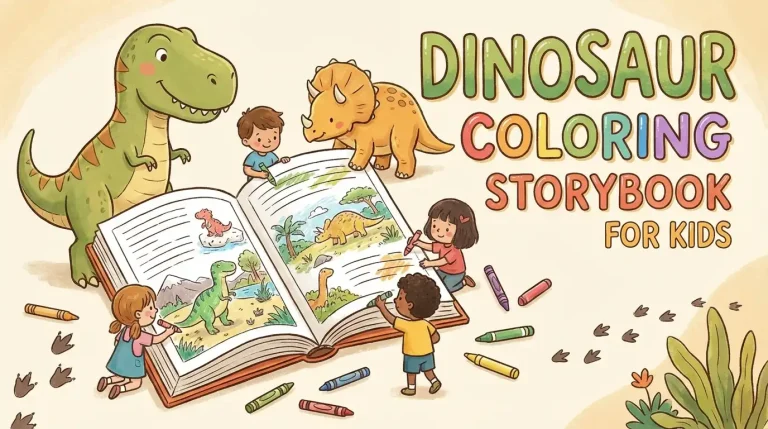
If your child finishes quickly, you can extend the activity. Line up small toys to create your own dinosaur pattern or you can also create your own dinosaur storybook. Clap a simple rhythm and ask them to repeat it. Patterns are everywhere once you start looking.
Using Pattern Matching in the Classroom
In a preschool or kindergarten classroom, these worksheets fit well into math centers or quiet independent work. They also work nicely during a dinosaur themed unit, when excitement is already high.
Some teachers like to introduce the pattern as a group activity first. Model one example together. Then let students try independently. That gentle shift from guided to independent practice helps build confidence.
You might even hear kids start creating their own patterns for each other. That is when you know the concept is really clicking.
Keeping It Fun and Low Pressure
Not every child will solve patterns quickly. Some need more repetition. Some need simpler sequences at first. That is completely normal.
Keep the tone light. Celebrate effort. If a child makes a mistake, treat it like part of the process. Learning to recognize patterns is not about speed. It is about understanding.
And dinosaurs help. They just do.
A Simple Way to Build Big Skills
Dinosaur Pattern Matching Worksheets offer a gentle, engaging way to build early math and thinking skills. Kids get to interact with fun dinosaur images while strengthening logic, focus, and visual recognition.
It is one of those activities that feels small in the moment. Just a few pictures in a row. A missing space to fill in.
But those small moments add up. And sometimes that is how the strongest learning happens. Quietly. Playfully. One pattern at a time. Get more free printable dinosaur based activities for free on our website.